



Anonymous Crypto Casino Australia: Privacy Explained
 Available in US
Explore crypto payments, bonus conditions and casino withdrawals while weighing privacy against legitimacy and exposure.

Table of Contents
- What “Anonymous” Really Means at a Crypto Casino in Australia
- Bitcoin Casinos, Crypto Deposits and the Bonus Catch
- How Anonymous Crypto Casinos Actually Handle Payments
- Choosing Between Offshore Crypto Casinos Without Mistaking Privacy for Legitimacy
- What the Best Anonymous Crypto Casino Setup Looks Like in 2026
- No-Deposit Crypto Bonuses: Read the Conditions Before You Click
- Bitcoin Casino Withdrawals: Fast on the Blockchain, Not Always Fast at the Casino
- The Anonymous Cryptocurrency Casino Trade-Off: Speed, Privacy and Exposure
- Finding a Bitcoin Casino That Is Private Without Being Careless
- Bitcoin Casino Anonymous Payments: The Final Safety Checks
What “Anonymous” Really Means at a Crypto Casino in Australia
The word “anonymous” does a lot of work in crypto casino advertising. I have seen it used to mean “no bank card”, “no account checks”, and sometimes almost “nobody can find you”. Those are three different claims. The first may be true in a narrow sense. The others need much more caution.
For an Australian player, an anonymous crypto casino usually means that the payment can begin without a conventional bank deposit. That can matter when a bank blocks online casino deposits entirely. Bitcoin can be sent from a wallet without the bank appearing as the payment rail for that particular transaction. It does not mean the gambling activity has vanished, or that the person behind the wallet cannot be connected to it.
That distinction is the starting point.
A wallet is not an invisibility cloak
Bitcoin and other blockchain payments are pseudonymous, not anonymous. The public ledger permanently records transactions, including wallet addresses, amounts and transaction history. A wallet address is not automatically a name, but it is a visible identifier. If it becomes linked to you through an exchange account, a payment record, a device, or a platform’s own records, earlier and later activity may become easier to connect.

I made the mistake of treating a new wallet as a clean identity. It was only a new address. The blockchain still recorded what happened there, and the exchange I used had its own account information. That is the uncomfortable part of the “crypto casino anonymous” idea: fewer obvious banking references do not equal no trail.
A casino may also hold information that never appears on-chain. Your registration details, login history, communications, IP information and account activity can sit in the operator’s systems. SSL encryption helps protect financial information and sensitive player data while it moves between you and the casino. That is useful security, but encryption is not the same thing as anonymity. It protects the connection; it does not erase records.
“No KYC” can have a very narrow meaning
Some sites use phrases such as “no KYC” or “anonymous casino site” to suggest that identification will never be requested. You should read that as a marketing claim until the actual account terms say otherwise. It may refer only to opening an account or making a small transaction. A later review can still require identity documents, especially before a significant withdrawal.
Most licensed crypto casino platforms require identity verification before processing significant withdrawals. The KYC process can include:
- a passport or other identity document;
- proof of address;
- verification of the payment method.
So an anonymous online casino may not remain anonymous when money has to leave the platform. That is where many players discover the difference between “registration without immediate checks” and “no identity verification at all”. They are not the same promise.
I once focused on the deposit screen because it looked simple and private. I did not read the withdrawal conditions with the same care. That was backwards. The important question is not only what a casino asks before accepting crypto, but what it can ask before releasing funds.
Privacy and Australian law are separate issues
There is another limit that advertising often leaves blurry. Australia does not have a domestically licensed real-money online casino for Australian players. Online casino games, including pokies, roulette, blackjack and live dealer tables, are prohibited interactive gambling services when offered to an Australian customer under the Interactive Gambling Act 2001.
The Act targets the provider rather than the individual player. That means an Australian is not committing a crime merely by placing a bet at an offshore site. It does not turn the site into a legal Australian casino, and it does not create local consumer protection. An offshore operator’s foreign licence, if it has one, is not an Australian casino licence and does not authorise casino games for Australian customers.

That matters when judging a “best anonymous crypto casino”. Privacy language can distract from the more basic question of who is operating the service and what protection exists if something goes wrong. The Australian market has a higher concentration of unlicensed or lightly regulated platforms than the fiat casino market. Anonymous branding should make you more careful, not less.
There is no Australian public register of licensed online casino operators to consult, because no Australian casino licence exists for this product. ACMA does publish a register for Australian-licensed interactive wagering service providers, but that concerns licensed wagering services rather than creating a list of legal online casinos.
Protecting your side of the transaction
Even when the operator uses SSL and the blockchain behaves as expected, the wallet remains your responsibility. Losing private keys can mean losing access to funds. A compromised wallet can expose funds before you notice anything. Crypto transfers also do not carry the same consumer protection as banking infrastructure.
Recovery Risk Crypto transfers are not reversible. If funds are sent to a wrong address or an unavailable operator, recovery can be extremely difficult.
That changes the meaning of privacy. You may avoid putting a casino deposit through a bank, but you also lose some of the familiar recovery routes associated with a bank payment. If funds go to an unavailable operator or a wrong address, recovery can be extremely difficult. The blockchain does not know that the mistake was accidental.
The safest interpretation of “anonymous casino online” is therefore limited: the payment may reduce direct bank involvement, while the transaction remains publicly traceable and the operator may still identify you. Your wallet is pseudonymous. Your account may be subject to KYC. The legal position concerns the provider, not a promise that the service is approved for Australians.
That is less exciting than the advert. It is also much closer to reality.
Bitcoin Casinos, Crypto Deposits and the Bonus Catch
Bitcoin is the default crypto payment method across crypto casino platforms in Australia. That does not make it automatically private, safe, or suitable for every deposit. It means operators are more likely to display a Bitcoin option than support a less common coin, so the practical choice often starts with whether you already hold BTC and understand how to send it correctly.
I made the mistake of treating the payment button as the important part. It was not. The real questions were what currency the balance would show, whether the casino would accept the exact network I used, and what happened to the promotional funds after the deposit landed.
Why Bitcoin appears first
A Bitcoin deposit keeps the payment outside the ordinary bank-deposit route. That appeals to players whose bank blocks online casino deposits, and it also suits people who already use a crypto exchange or wallet. A profile-level review reports that cryptocurrency deposits at Australian online casinos may be credited within an hour, but that is not a promise for every operator or every transaction.

The attraction is straightforward: crypto users can fund an account without entering card details or relying on a bank approval. Crypto also attracts gamblers looking for faster transactions and larger deposit capacity. Those benefits come with a different set of responsibilities. You must control the wallet, select the correct asset, check the destination address, and accept that a completed transfer cannot simply be reversed through your bank.
Bitcoin is not the only option. Some platforms also show Ethereum, USDT or Litecoin, but support varies. Bitcoin remains the easiest starting point to recognise across the market. That convenience should not be confused with anonymity. The previous section covered that distinction; here, the useful point is more basic: a crypto payment changes the funding rail, not the underlying rules or the operator’s obligations.
Crypto deposits are not fiat deposits with a different logo
With a fiat deposit, the payment provider normally handles the conversion and the account is credited in a familiar currency. With crypto, the amount may arrive as BTC or another supported asset, while the value of that balance can move against the Australian dollar during play. The result can change even when the gambling result does not.
A Bitcoin balance that looks unchanged in coins may be worth less in AUD later. The same applies to Ethereum. A source identified by the domain oceanroadmagazine.com.au illustrates the exposure with a ten-per-cent Bitcoin price fall: the AUD value of a deposit can fall by ten per cent before any game outcome occurs. That is not a casino fee or a losing bet. It is market movement.
USDT is different in purpose. It is a stablecoin designed around a value of one US dollar, so depositing in USDT removes the same kind of price exposure while retaining the access features associated with crypto. It still requires careful network selection and wallet security. “Stable” does not mean a transfer can be recovered after it reaches the wrong address.
Withdrawal Timing Some specialist reviews suggest crypto and instant bank transfers are processed within a few hours, but this is reported guidance rather than a universal guarantee.
Some specialist reviews describe crypto and instant bank transfers as being processed within a few hours, calling that an industry norm for withdrawals. Treat that as reported guidance, not a universal service level. The operator’s own approval process and the network still matter.
“No deposit” does not mean free cash
The phrase “no deposit bonus” sounds like money placed in your account without conditions. That is how I read it the first time. In practice, promotional funds can be restricted, tied to a qualifying action, limited to specific games, or unavailable for withdrawal until the stated requirements are completed.
The same warning applies to searches for anonymous Bitcoin casinos with no-deposit offers, anonymous sign-up bonuses, or real-money play without identity checks. The label describes a promotion or registration style, not a guarantee that you can withdraw immediately or avoid verification later. A platform may allow an initial account action with limited information and still request documents before processing a significant withdrawal.
There is also a legal issue for Australian readers. Online casino games, including pokies, roulette, blackjack and live-dealer tables, are prohibited interactive gambling services when offered to Australian customers under the Interactive Gambling Act 2001. No domestically licensed real-money online casino exists for Australian players. The law targets the provider rather than the individual player, but an offshore website should not be presented as a legal or Australian-licensed casino option. This section explains payment language; it is not a recommendation to use a prohibited service.

The welcome-bonus comparison that can mislead
A promotional comparison reported by oceanroadmagazine.com.au describes a standard AUD offer of 100% up to A$750, while the crypto version at the same platform showed 200% up to $3,000 USDT. Read that as one reported example, not as a market standard or a promise available now.
The larger headline number is designed to catch the eye. It does not tell you whether the bonus is better. Crypto bonuses may carry the same wagering multiplier as fiat bonuses, or a different one, and withdrawals remain locked until the applicable wagering threshold is met. The deposit method can therefore change the size and currency of the advertised bonus without improving the route to withdrawable funds.
Before sending Bitcoin, I would read the bonus terms in this order:
- whether the promotion is available to Australian customers at all;
- whether the bonus is tied to Bitcoin, USDT or another currency;
- whether the deposit itself must remain in the account;
- which games count towards the conditions;
- when a withdrawal becomes available;
- whether identity checks can still be required.
That list is less exciting than a “best anonymous Bitcoin casino” label. It is also more useful. A bonus is not a discount on gambling. It is a separate balance with rules attached.
The cleanest way to compare offers is to ignore the headline until you know what can actually be withdrawn. If the terms are unclear, the attractive number is just decoration. Check first. Deposit second.
How Anonymous Crypto Casinos Actually Handle Payments
I used to think the payment part was simple: copy an address, send coins, wait for the balance to appear. That is the version shown in flashy adverts for anonymous crypto casinos. In practice, the payment has several separate stages, and a mistake at any one of them can leave you chasing funds that cannot be reversed.
The first distinction is between the casino account and the wallet transaction. You may create an account with limited personal information, but the deposit still moves from your wallet to a blockchain address controlled by the operator or its payment processor. The chain records that movement permanently. The casino then credits your account after it detects the transaction and applies its own rules.
The Deposit Route
You move funds from your private wallet to a blockchain address controlled by the operator.
The network verifies the movement on the public ledger.
The casino detects the confirmation and updates your internal account balance.
That is the basic route:
wallet → casino deposit address → blockchain confirmation → account balance
The withdrawal runs in the opposite direction, but it is not simply an automatic refund:
casino balance → withdrawal request → internal approval → wallet address → blockchain transfer
I learned the hard way that the middle steps matter more than the advert.
Bitcoin: the familiar route, with network timing attached
Bitcoin remains the payment most associated with an anonymous Bitcoin casino because it is accepted across a broad range of crypto casino platforms. The process is familiar. You select Bitcoin in the cashier, copy the displayed BTC address, enter that address in your wallet, choose the amount, and broadcast the transaction.
The danger is that Bitcoin is not just a digital version of cash. The transaction must be confirmed on the Bitcoin network, and confirmation timing can change when the network is congested. A deposit may therefore appear as sent in your wallet while the casino is still waiting for the network status it requires before crediting the account.
This is where I made a stupid assumption: I saw the transaction marked as complete on my side and treated the casino balance as late. Those are different events. Your wallet can broadcast a transaction before the casino accepts it as a confirmed deposit.
The same applies to withdrawals. Once the casino approves the request and broadcasts the transaction, the funds are moving on the blockchain. Before that approval, nothing has been sent to your wallet, even if the withdrawal page shows a pending request.
Ethereum: faster processing, variable gas
Ethereum is accepted at most platforms that accept BTC, according to the source material used for this guide, and it processes faster than Bitcoin. That can make it attractive when you want to move funds without waiting on the Bitcoin network.

But Ethereum has its own technical detail: gas. The network fee changes with activity and can be higher during busy periods. The amount you see leaving your wallet is therefore not just a question of the casino deposit amount. You also need to account for the network cost attached to sending it.
There is another point that is easy to miss. An Ethereum address is not automatically suitable for every token available through an Ethereum-style payment screen. The asset and the network must match the casino’s instructions. Copying an address is not enough; you must check what asset the cashier requested before confirming the transfer.
For withdrawals, the same check applies in reverse. A casino may display an Ethereum withdrawal option, but you still need to use an Ethereum-compatible receiving address and follow any instructions about the selected asset.
USDT: less price movement, more network responsibility
USDT is a stablecoin designed to hold a value of one US dollar. That removes the price volatility attached to the deposit and withdrawal amount itself, which is the main reason I would consider it when I do not want the gambling balance changing in value simply because the market moved.
That does not make USDT risk-free. USDT can be available across different networks, and selecting the wrong one can create a serious recovery problem. The address may look correct while the network is not the one supported by the casino or your wallet. Before sending, I check the asset, the network and the destination address as three separate things.
USDT also does not remove the casino’s internal process. The platform still has to recognise the deposit, and a withdrawal still has to be requested and approved before the transfer reaches your wallet.
Litecoin: a secondary option, not a shortcut
Litecoin is described in the supplied evidence as a fast and inexpensive payment option accepted at many platforms as a secondary choice. It can be useful if the cashier supports it and you already hold Litecoin in a wallet.
Litecoin Checklist
The practical flow remains the same: select Litecoin, copy the address, verify that the address belongs to the Litecoin network, and send only Litecoin to it. A different cryptocurrency is not interchangeable just because the address appears in the same cashier. I never rely on visual similarity between wallet addresses.
Volatility can change the value while you play
Bitcoin and Ethereum balances can change in value while you are playing, independently of the gambling result. This is separate from winning or losing at the tables or on the games.
The arithmetic is uncomplicated but easy to ignore. If Bitcoin falls by ten per cent, a Bitcoin deposit can lose ten per cent of its AUD value before any gambling outcome occurs. You could finish with the same BTC amount and still have a smaller Australian-dollar value.
USDT avoids that particular price exposure because it is intended to maintain a value of one US dollar. It does not protect you from a wrong address, an unsupported network, a compromised wallet or an unavailable operator.
The checks I make before pressing send
I stop at the payment screen and verify:
- the cryptocurrency selected;
- the exact network requested;
- the full wallet address;
- whether a memo or tag is required;
- the amount and network fee;
- whether the casino currently accepts that asset for both deposits and withdrawals.
Crypto transfers cannot be reversed after they are sent to the wrong address. Sending funds to an unavailable casino can be just as difficult to fix. Wallet security is also your responsibility: losing private keys or allowing a wallet to be compromised can mean losing access permanently.
That is the real payment experience behind the “anonymous” label. The wallet can reduce bank involvement, but it does not turn the transaction into an invisible or reversible one. Copy carefully. Check twice. Then send.
Choosing Between Offshore Crypto Casinos Without Mistaking Privacy for Legitimacy
An offshore crypto casino can look private simply because it accepts Bitcoin or another cryptocurrency. That is not enough for me. I have made the mistake of treating a wallet address, a clean-looking homepage and a promise of “no paperwork” as proof that a platform was trustworthy. They proved nothing.
Privacy and legitimacy are separate checks. A site may reduce bank involvement while still leaving you with weak complaint options, unclear ownership and no meaningful protection if a withdrawal is challenged.
There is also a legal point that cannot be skipped. In Australia, online casino games such as pokies, roulette, blackjack and live-dealer tables are prohibited interactive gambling services when offered to Australian customers under the Interactive Gambling Act 2001. No domestically licensed real-money online casino exists for Australian players. Foreign licensing does not change that position or authorise an offshore operator to serve Australians.
So the question is not, “Which site is the best anonymous casino?” A responsible answer cannot be a top-ten list or a list of anonymous casinos when the available evidence does not verify suitable operators. The useful question is whether the risks are visible before you send funds.
Start with the licence claim
Offshore platforms commonly mention Malta or Curacao licensing rather than an Australian casino licence. Treat the licence number as a claim to verify, not as a badge that settles the matter.
MGA and Curacao licensing authorities maintain public registers where a licence number and its status can be checked. That check can tell you whether the named entity appears in the relevant register. It does not turn the operator into an Australian-licensed casino, and it does not remove the Australian legal restrictions on online casino games.
Verifying a Licence MGA and Curacao licensing authorities maintain public registers where a licence number and its status can be checked. This allows you to verify if the named entity actually appears in the relevant register.
Look for the legal company name, the licence holder, the regulator and the conditions attached to the licence. If the footer shows only a logo, a vague jurisdiction or a broken verification link, I would not send crypto there. A polished design is cheap. A clearly identifiable operator is harder to fake.
Australia has no single overarching gambling statute or gambling authority. Regulation operates at state, territory and federal levels, and ACMA publishes a register of Australian-licensed interactive wagering service providers. That register is relevant to licensed wagering services, not proof that an offshore casino is authorised to offer online casino games to Australians.
Do not confuse “no KYC” with no review
The phrase “anonymous” often describes the sign-up stage, not the full relationship with the operator. A platform may allow an account to be opened with limited details and still request identity documents before releasing a significant withdrawal.
Most licensed crypto casino platforms require identity verification before processing significant withdrawals. The KYC process can include a passport, proof of address and payment-method verification. That may feel inconsistent with the privacy promise, but it is exactly why I read the withdrawal policy before depositing.
The important detail is not just whether KYC exists. Check when it can be triggered, which documents may be requested, whether the account name must match the wallet or payment account, and what happens if you cannot provide the documents. A vague answer creates a future dispute.
If a site promises permanent anonymity while refusing to explain its withdrawal review, that is not a privacy feature. It is missing information.
Examine the approval process
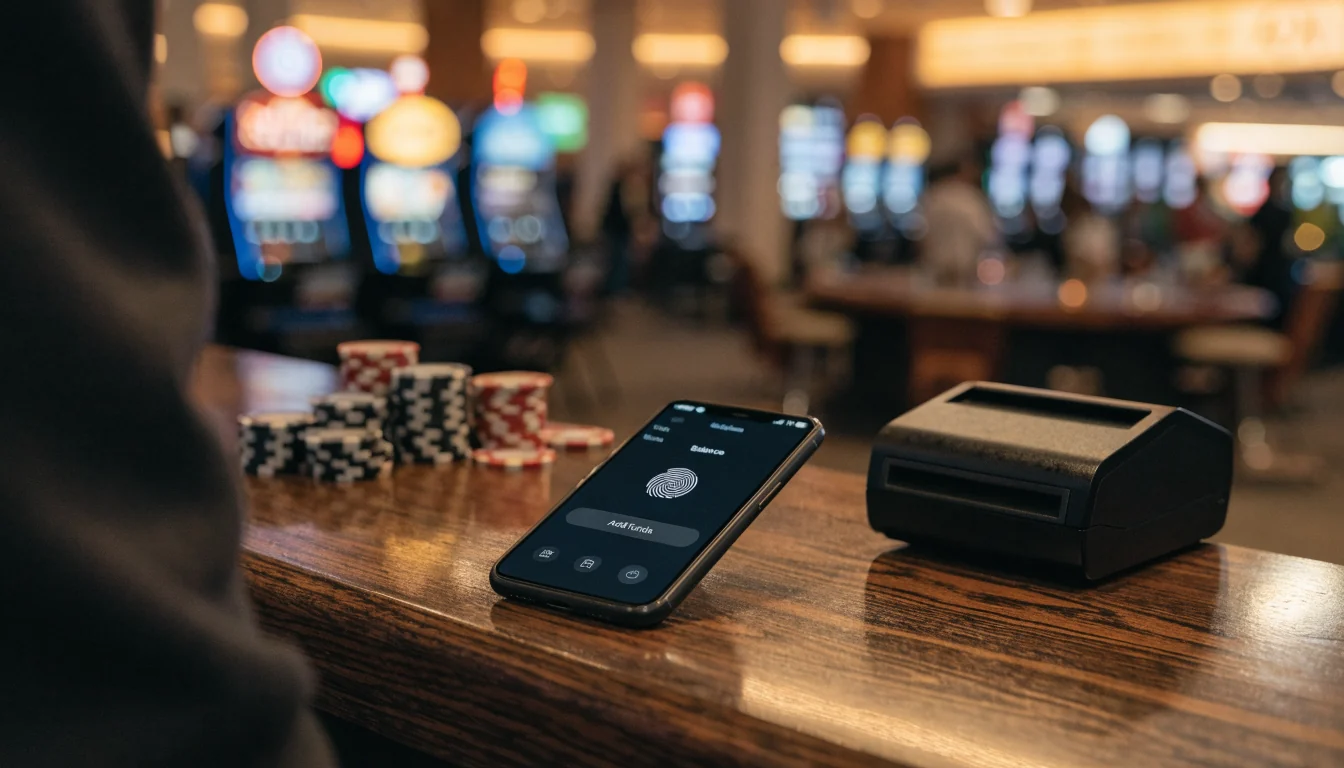
Crypto can move on the blockchain only after the casino starts the transfer. The internal approval queue comes first. A platform with a streamlined process may send funds to a wallet within thirty minutes of a withdrawal request, while a platform using manual review may take several hours; these are reported figures from oceanroadmagazine.com.au, not a market-wide guarantee.
That distinction matters when a site advertises “instant withdrawals”. The word may describe blockchain settlement after approval, not the time before approval. Read the terms for manual checks, account restrictions, pending statuses and requests for extra documents.
I also want to see a clear record of the withdrawal request: amount, cryptocurrency, destination address and status. If support cannot explain whether a transfer is pending internally or already broadcast to the network, I would stop adding money until the position is clear.
Check wallet handling, not just payment logos
A row of Bitcoin, Ethereum or USDT logos does not prove that the payment system is safe. The site should identify the network used for each asset and make the destination address easy to review before confirmation. Sending to the wrong address cannot be reversed, and sending an asset over the wrong network can make recovery extremely difficult.
Use a wallet you control rather than treating the casino account as a storage account. Keep private keys safe, protect recovery phrases and use strong account security. If your wallet is compromised or the private key is lost, the responsibility is yours. SSL encryption can protect financial transactions and sensitive player information while data moves between your device and the operator, but it cannot repair a mistaken transfer or recover a stolen key.
I would also check whether the operator changes deposit addresses, whether the withdrawal address must be pre-approved and whether the site explains how network fees are handled. Silence around basic wallet procedures is a serious warning.
Security Essentials
- Use a wallet you control rather than treating the casino account as storage.
- Protect your private keys and recovery phrases.
- Always verify the network and asset type before confirming a transfer.
- Remember that SSL encryption protects the connection but does not erase blockchain records.
Look for controls that work when you need them
Responsible gambling tools should apply regardless of the payment method. Before depositing, find the controls for deposit limits, session restrictions, self-exclusion and account closure. Test whether the instructions are visible and whether support explains how a restriction takes effect.
An offshore site may not provide the same consumer protection as Australian banking infrastructure. A bank dispute process, local complaint route or domestic gambling authority cannot be assumed. Crypto transfers are difficult to reverse, and the operator’s foreign licence, even if genuine, does not create Australian consumer rights.
That is why I would never judge an offshore platform only by game choice, privacy language or a large promotion. The real test is boring: identifiable ownership, verifiable licence information, understandable KYC rules, transparent approval procedures, secure wallet practices and usable gambling controls.
Still risky. Just visible.
What the Best Anonymous Crypto Casino Setup Looks Like in 2026
For Australians exploring anonymous crypto casino options in 2026, this list highlights operators by their stated licensing, bonuses, and minimum deposit details. Use each concise verdict as a starting point for checking which published features matter to you.
License: Curacao eGaming Licence · Min. deposit: A$10 Fair Go Casino is listed with a Curacao eGaming Licence and a minimum deposit of A$10. Its low stated entry deposit makes it a straightforward option to consider.
License: Curacao Gaming Control Board · Bonus: up to A$5,000 + 400 free spins JustCasino stands out for a bonus of up to A$5,000 plus 400 free spins. It operates under the Curacao Gaming Control Board.
License: Curacao eGaming Licence · Min. deposit: A$10 King Billy holds a Curacao eGaming Licence and lists a minimum deposit of A$10. It is included as an option with a clearly stated low starting deposit.
License: Curacao OGL/2024/1335/0780 · Bonus: up to A$1,000 + 150 free spins, wager-free · Min. deposit: EUR 20 Vegaz Casino operates under Curacao OGL/2024/1335/0780. Its offer includes up to A$1,000 plus 150 free spins, described as wager-free, with a minimum deposit of EUR 20.
License: Curacao Gaming Control Board OGL/2023/174/0082 (Dama N.V.) · Bonus: up to A$5,000 + 300 free spins across 4 deposits SpinsUp is licensed by the Curacao Gaming Control Board under OGL/2023/174/0082 through Dama N.V. Its promotion offers up to A$5,000 plus 300 free spins across four deposits.
License: Curacao Gaming Control Board OGL/2023/176/0095 (Hollycorn N.V.) · Bonus: up to A$1,500 + 200 free spins across 3 deposits LuckyVibe operates under Curacao Gaming Control Board licence OGL/2023/176/0095 through Hollycorn N.V. Its stated promotion reaches A$1,500 plus 200 free spins across three deposits.
License: Curacao eGaming (Roby Games Ltd) · Bonus: 100% up to A$750 + 200 free spins Roby Casino is associated with Curacao eGaming through Roby Games Ltd. Its listed promotion is 100% up to A$750 plus 200 free spins.
Bonus: 240% up to A$4,100 + 300 free spins WinShark is notable for a listed 240% bonus of up to A$4,100 together with 300 free spins. No licensing detail is provided here.
License: Curacao eGaming (Dama N.V.) · Bonus: up to A$10,000 + 180 free spins, 40x wagering JeetCity Casino operates under Curacao eGaming through Dama N.V. Its promotion offers up to A$10,000 plus 180 free spins, with 40x wagering.
License: Curacao (operating since 2017) · Bonus: 250% up to A$2,000 + 50 free spins on the first of six deposits · Min. deposit: A$20 Uptown Pokies operates under Curacao and has been operating since 2017. It lists a 250% bonus up to A$2,000 plus 50 free spins on the first of six deposits, with a minimum deposit of A$20.
There is no verified list of “best anonymous casinos” I can responsibly hand you. For an Australian player, the more useful question is what a sensible setup should look like before any money moves.
The first point is uncomfortable but important: online casino games are prohibited interactive gambling services in Australia. No Australian casino licence exists for offering pokies, roulette, blackjack or live dealer games to local customers. The Interactive Gambling Act 2001 targets providers rather than players, but that does not turn an offshore website into a legal or locally protected option.
So privacy is only one part of the decision. It can mean keeping a bank out of the payment chain, not becoming invisible. Bitcoin is the most widely accepted cryptocurrency across crypto casino platforms in Australia, and a Bitcoin deposit may avoid a bank block. That solves an access problem, not a licensing problem.
A realistic 2026 checklist
I would separate the decision into five questions:
- What does “anonymous” actually mean? Check whether the platform allows registration with limited personal information, but do not assume that this removes later identity checks. A significant withdrawal may still trigger verification.
- What legal protection exists? A foreign licence, if claimed, does not authorise casino games for Australian customers. Treat licensing information as due-diligence material, not as permission to play.
- Which payment fits the risk? Bitcoin offers the broadest acceptance in this market, but its value can move while funds remain on the account. USDT removes price exposure while retaining the speed and access benefits of crypto.
- How are withdrawals handled? Crypto withdrawals settle faster than fiat methods once the casino’s internal approval is complete. That does not tell you how long the platform will take to review a request.
- What happens if something goes wrong? Crypto transfers do not have the same consumer protection as banking payments. A wrong address, an unavailable operator or a compromised wallet can leave you carrying the loss.
I have made the classic mistake of treating a clean payment page as evidence that the whole operation was clean. It is not. A polished interface can show Bitcoin, USDT and several other methods while saying little about ownership, dispute handling or withdrawal decisions.
The least misleading setup is therefore not a “best” named casino. It is a narrow risk choice: understand that the service is offshore and prohibited for providers, use only a wallet you control, avoid exposing yourself to price movement if USDT is available, and never confuse reduced bank involvement with genuine anonymity.
That is the trade-off. Less bank friction. More personal responsibility.
No-Deposit Crypto Bonuses: Read the Conditions Before You Click
A “no-deposit” crypto bonus sounds like free money because that is exactly how the headline is designed to land. In practice, it is promotional credit attached to conditions. You may be allowed to place bets with it, but that does not mean the balance is ready to withdraw.
The important distinction is between playing with bonus funds and converting them into withdrawable funds. The promotion may require wagering before any withdrawal is released. The crypto terms can match the fiat terms, or they can use different wagering multipliers. Either way, the threshold controls access to the money.
Bonus Conditions Attention A “no-deposit” bonus is promotional credit tied to specific requirements and does not guarantee that funds are immediately withdrawable.
I learned this the annoying way: I looked at the displayed balance, treated it as mine, and only read the terms after trying to withdraw. That order is backwards. Read the conditions before accepting the offer.
No deposit does not mean no conditions
A no-deposit offer may still require account registration, eligibility checks, a minimum number of qualifying bets, restricted games, or a time limit. The available facts do not establish one universal set of rules, so do not assume that a promotion is cash simply because it does not require an initial deposit.
Deposit-linked offers have the same trap in a different wrapper. A crypto promotion can be larger than the cash version shown on the same platform. One reported comparison describes a standard AUD welcome offer of 100% up to A$750, while the crypto version is presented as 200% up to $3,000 USDT. That is a specific comparison, not a market-wide promise, and the larger headline does not remove the wagering requirement.
USDT can make the value easier to follow because depositing in USDT removes the price exposure associated with assets such as Bitcoin while preserving crypto payment access. It does not remove promotional restrictions. A stablecoin balance can still be locked behind wagering rules.
Before clicking Claim, check:
- whether the offer is no-deposit or deposit-linked;
- which balance is withdrawable;
- the wagering threshold and eligible games;
- whether winnings remain restricted until the threshold is met;
- what identity or approval checks apply at withdrawal.
“Free” is the label. The conditions are the product.
Bitcoin Casino Withdrawals: Fast on the Blockchain, Not Always Fast at the Casino
I used to read “instant withdrawal” as if the coins would leave the casino the moment I clicked confirm. That is not what it means. The phrase can describe the blockchain leg only, and that leg begins after the casino approves the request.
The sequence is simple:
- You submit a Bitcoin withdrawal.
- The casino checks and approves it.
- The casino broadcasts the transaction.
- The Bitcoin network confirms it in minutes once the transfer has started.
The important delay sits between the first and third steps. A platform’s internal approval time varies, and that queue decides when your transaction reaches the blockchain. A streamlined process may send the funds to your wallet within thirty minutes of the request, according to reporting by oceanroadmagazine.com.au. The same source reports that manual review can take several hours.
So “fast on the blockchain” does not mean “immediately released by the casino.” A request made outside support hours may still wait for the operator’s review, even though the network itself runs regardless of the time or day.
That distinction matters even more when a platform describes its service as “anonymous”. Privacy language does not remove account checks or an approval queue. If the casino needs to review the withdrawal, the Bitcoin transfer has not started yet.
Once approved, the remaining wait is a network matter rather than a casino queue. Keep the transaction ID and check that the receiving wallet address is correct before submitting. Bitcoin transfers cannot be reversed.
Fast settlement. Slow approval. That is the real split.
The Anonymous Cryptocurrency Casino Trade-Off: Speed, Privacy and Exposure
Crypto payments can reduce the amount of information passing through your bank, but that is not the same as disappearing. I learned that distinction the hard way. A wallet address may not carry your name, yet every transaction is permanently stored on a public, traceable blockchain. If that address becomes linked to you, the payment history can become easier to follow than you expected.
That is the privacy trade-off: less bank involvement, not true anonymity.
Speed is another attraction. Once a casino approves a withdrawal, the blockchain can settle the transfer quickly, without waiting for a traditional banking process. But “quick” does not remove the need to check the address, asset and network before sending. Crypto transfers cannot simply be recalled because you made a mistake.
- Check the wallet address character by character
- Verify the selected network and currency
- Confirm the operator is currently active and accepting withdrawals
- Rely on old messages or saved screenshots for addresses
- Assume Bitcoin and Bitcoin Cash are interchangeable
- Send funds through the wrong network
Then there is exposure to price movement. Bitcoin and Ethereum balances can change in value while you are playing, independently of whether your gambling result is positive or negative. You can finish with the same coin balance and still have a different AUD value. The gambling outcome is only one part of the risk.
Wallet security sits with you as well. A lost private key, compromised device or careless transfer can put funds beyond practical recovery. No bank is waiting to reverse the payment.
So the appeal of an anonymous cryptocurrency casino is easy to understand: fewer bank touchpoints and potentially faster settlement. The cost is a public transaction trail, personal responsibility for wallet security and market exposure. Privacy has limits. Crypto is not invisible money.
Finding a Bitcoin Casino That Is Private Without Being Careless
I understand why people look for a private Bitcoin casino. Bitcoin can avoid bank involvement, and it is the most widely accepted cryptocurrency across crypto casino platforms in Australia. But “private” should not mean sending coins to the first site that promises no questions asked.
My checklist starts with Bitcoin itself. Confirm that the payment page accepts Bitcoin, not merely a vague reference to “crypto”. Check the deposit instructions carefully before transferring anything. A payment method being available does not prove that the operator is trustworthy, lawful for Australian customers, or capable of returning funds.
Licensing needs equally careful wording. Australia has no domestic licence for online casino games, and offering pokies, roulette, blackjack or live-dealer casino games to Australians is prohibited under the Interactive Gambling Act 2001. A foreign licence does not change that position or authorise service to Australian customers. I would not treat a Malta or Curacao licence as an Australian approval, and I would not claim that any casino is ACMA-licensed.

Then look at identity checks. A site advertising “anonymous” play may still request verification before a significant withdrawal. Most licensed crypto casino platforms require identity verification at that stage. That can include personal documents and payment checks, so the word “anonymous” is not a promise that your identity will never be requested.
A practical privacy check
Before creating an account, find the withdrawal rules and approval procedure. If the operator does not explain when verification can occur, that uncertainty matters. I would also look for responsible gambling controls, including deposit limits and account restriction tools. Privacy is not useful if the platform gives you no way to control your spending.
There is no verified named recommendation to give here. The safer conclusion is simple: treat Bitcoin acceptance as one check, not proof of privacy, legality or reliability. No shortcuts.
Bitcoin Casino Anonymous Payments: The Final Safety Checks
The last mistake I made with crypto payments was not dramatic. I copied an address, rushed through the confirmation screen, and nearly sent funds to the wrong place. With a bank transfer, there may be a recall process or a complaints path. A blockchain transfer is different: once confirmed, it cannot simply be reversed.
Before sending anything to a Bitcoin casino, I now check three things:
- the wallet address, character by character;
- the selected network and currency;
- whether the operator is still available and accepting withdrawals.
Bitcoin and Bitcoin Cash are not interchangeable. The same applies to any other cryptocurrency and its network. Sending the right amount through the wrong network can leave the funds unrecoverable. I also make sure the deposit address belongs to the current account page, rather than relying on an old message or saved screenshot.
An unavailable casino creates the same practical problem as a wrong address. If the website disappears, stops processing withdrawals or closes an account, recovering the money can be extremely difficult. That is why I avoid treating a private-looking Bitcoin casino as automatically trustworthy. Privacy does not replace a functioning support channel, clear terms or responsible gambling controls.
Wallet security is my responsibility too. A lost private key can lock me out permanently, while a compromised phone, seed phrase or exchange account can expose the balance before I notice. I keep access details private and never share a recovery phrase with support.
Bitcoin can reduce bank involvement; some Australian banks block online casino deposits, while Bitcoin deposits do not require that bank route. But the blockchain is pseudonymous, not anonymous. Its records are public, permanent and traceable, and crypto payments do not carry the same consumer protection as banking infrastructure. No shortcuts there.
What does a licensed online casino in Australia actually mean?
It does not mean there is an Australian licence for online casino games: Australia has no domestic licence for this product. An offshore licence may regulate the operator in another jurisdiction, but it does not authorise casino games for Australian customers or provide Australian consumer protection.
Do Neosurf deposits qualify for casino bonuses?
The available information does not explain whether Neosurf deposits qualify for bonuses, so check the casino’s bonus terms before depositing.
What help is available for problem gamblers?
The available information does not identify specific support services for problem gamblers.
What enforcement powers and sanctions exist?
The Interactive Gambling Act 2001 targets providers offering prohibited online casino services to Australian customers. The available information does not specify the enforcement powers or sanctions.
Who regulates the Australian gaming industry?
ACMA maintains a register of Australian-licensed interactive wagering service providers, but this does not create a register of legal online casinos. No Australian casino licence exists for online casino games.
What is the role of BetStop in self-exclusion?
The available information does not explain BetStop’s role in self-exclusion.
How do recent court rulings shape the landscape?
The available information does not discuss recent court rulings or their effect on the online casino landscape.
Are there state versus international licensing differences?
Yes. An offshore licence is issued under another jurisdiction’s rules and is not an Australian casino licence; it does not authorise online casino games for Australian customers or provide local consumer protection.
Written by the editors at Australian Odds Guide.